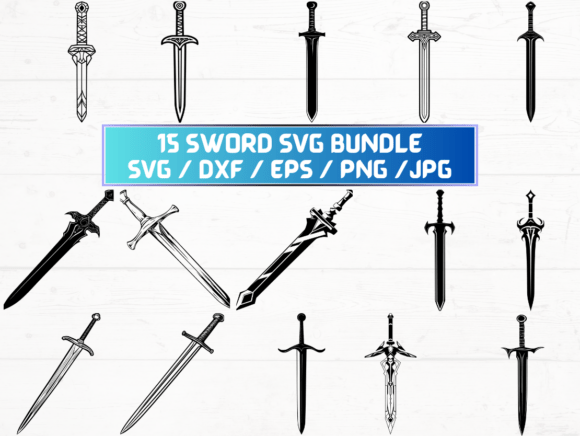
Sword Laser Engraving Cut File: Graphics for Crafts Projects
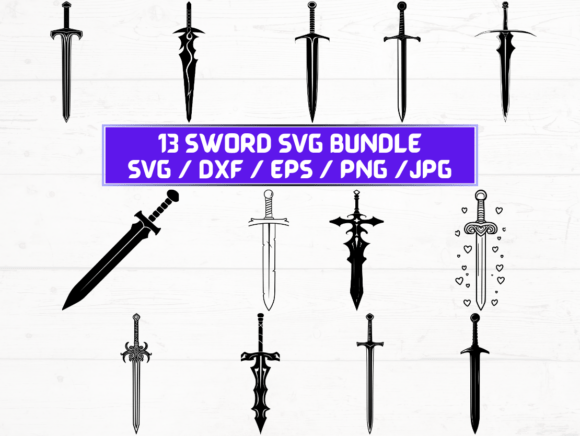
As a graphic designer who’s built brand identities for handmade businesses, seasonal Etsy launches, and local craft fairs over the past 12 years, I opened Sword Laser Engraving Cut File expecting sharp, precise vector work — and what I found was something more nuanced: a set of bold, stylized sword motifs that straddle decorative flair and functional precision. This isn’t just clipart; it’s a graphic design asset engineered for real-world making — whether you’re prepping a t-shirt design for a fantasy-themed small business branding package or building printable wall art for a medieval-inspired boutique collection.
A First Impression That Sets the Tone
The moment you unzip the folder, the mood is clear: confident, slightly dramatic, and intentionally crafted for tactile impact. These aren’t minimalist line drawings — they’re rich in engraved texture, with deliberate bevels, subtle shadowing, and crisp negative space that mimics actual laser-cut wood or acrylic. That visual language instantly signals handmade business, artisanal craftsmanship, and themed creative marketplace energy. It fits naturally in projects where authenticity, storytelling, and materiality matter — think packaging design for a locally brewed mead brand, social media graphics for a D&D convention, or product mockups for a leather goods line launching a “Guardian Collection.”
Where Sword Laser Engraving Cut File Shines in Client Work
This design bundle performs exceptionally well in contexts where visual weight and thematic cohesion elevate perceived value:
- Product mockups — The SVG and EPS files scale flawlessly on mugs, tote bags, and wooden coasters, preserving engraved detail at any size.
- Sticker design and Cricut projects — DXF compatibility means clean cuts on vinyl or cardstock; PNGs at 300 dpi hold up beautifully in sublimation design workflows.
- Packaging design — Use as foil-stamped accents on kraft boxes or embossed elements on hang tags to reinforce a premium handmade aesthetic.
- Social media graphics — Layered over textured backgrounds in Canva templates or Instagram posts, these swords add instant narrative without overwhelming the message.
- Printable design collections — As part of an editorial design suite for a fantasy journal or themed planner, they anchor layouts with consistent visual rhythm.
It also integrates smoothly into brand identity systems — not as a primary logo (too stylistically specific), but as a supporting element in pattern repeats, divider lines, or icon sets that unify a larger creative design system.
Where to Use It Thoughtfully — Not Automatically
Like any strong visual motif, Sword Laser Engraving Cut File demands intentionality. It’s less effective in:
- Minimalist branding — Its engraved depth and decorative emphasis clash with ultra-clean corporate identities or modern design frameworks built on restraint.
- Small-scale applications — At under 1 inch wide, fine engraved lines blur; always test print at final size before committing to sticker sheets or embroidery digitizing.
- Crowded or low-contrast layouts — On busy photo backgrounds or near competing patterns, it can lose hierarchy and weaken visual trust.
- Typography-forward designs — When paired with delicate script fonts or thin sans serifs, contrast imbalance risks undermining readability and professionalism.
In short: this is a commercial design asset best deployed where its character enhances — not competes with — the core message.
Designer Notes You Can’t Skip Before Client Use
Before dropping Sword Laser Engraving Cut File into a live project, run these practical checks:
- Test in black and white — Does the engraved effect translate when color is removed? Essential for monochrome packaging or newspaper ads.
- Preview on light and dark backgrounds — Confirm PNG transparency renders cleanly and that contrast meets WCAG guidelines for accessibility.
- Scale it down and up — Verify SVG paths remain smooth at both thumbnail sizes (e.g., Pinterest pins) and hero graphics (e.g., website banners).
- Place it on real mockups — Don’t rely on flat previews. Test how it sits on a physical mug mockup or woven fabric swatch.
- Review file formats critically — EPS files should open cleanly in Illustrator; DXF must import without path corruption in Cricut Design Space or Silhouette Studio.
- Inspect PNG transparency — Zoom in to ensure no stray pixels or anti-aliasing halos compromise clean edges.
- Compare with typography — Try pairing with serif, sans serif, script, and display fonts to assess visual harmony and emotional resonance.
- Confirm commercial licensing — Especially for print-on-demand sellers and digital product creators, verify usage rights cover resale, merchandising, and client deliverables.
Final Verdict: A Strategic Creative Asset, Not Just Another Download
Sword Laser Engraving Cut File isn’t filler — it’s a purpose-built creative design tool for designers who understand that every visual choice contributes to audience engagement and brand consistency. When used with intention — in themed campaigns, artisan packaging, or cohesive printable design systems — it deepens emotional appeal and reinforces authenticity. For Cricut users, Etsy sellers, and small business branding projects rooted in craftsmanship, it delivers measurable polish without sacrificing flexibility. Just remember: great design assets don’t replace judgment — they reward it.