Brain SVG File: Graphics for Crafts & Local Branding
As a brand designer who’s developed visual identities for over 30 local businesses—from artisanal candle studios in Portland to family-run kombucha breweries in Asheville—I recently evaluated the Brain SVG File for a real-world project: rebranding a neuro-informed wellness boutique specializing in handmade herbal tinctures, mindfulness journals, and calming teas. My goal wasn’t just aesthetic fit—it was functional alignment across packaging, labels, social media, and in-store signage. Here’s what stood out.
A First Impression That Speaks Before You Do
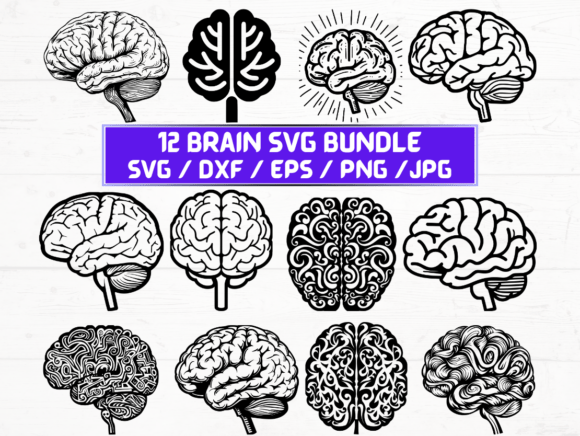
The Brain SVG File delivers a clean, softly detailed illustration—not clinical or cartoonish, but thoughtfully stylized. It reads as modern yet approachable, scientific but warm—ideal for brands that balance intelligence with empathy. Think: a skincare line rooted in neuroscience-backed ingredients, a children’s learning toy shop, or a coffee roaster highlighting “brain-boosting” adaptogens. It leans into organic curves and gentle line weight, avoiding sharp edges or sterile minimalism. This isn’t clipart; it’s a considered graphic design asset with breathing room and subtle personality.
Where It Elevates Real Local Business Branding
In our wellness boutique project, we used the Brain SVG File across six high-impact touchpoints:
- Product labels: Scaled down to 1.25" wide on amber glass tincture bottles—crisp in both SVG and 300 dpi PNG formats, with flawless transparency preserving label background texture.
- Packaging accents: Embossed subtly on kraft paper tea boxes and foil-stamped on thank-you cards—its vector scalability (SVG + EPS) ensured zero pixelation at any size.
- Social media graphics: Layered over muted sage and clay gradients in Canva templates for Instagram carousels explaining ingredient benefits—its clean silhouette created instant visual hierarchy without competing with body text.
- Menu & price list design: Used as a delicate divider icon between service categories at the boutique’s front counter—small but memorable, reinforcing brand identity without overwhelming.
- Seasonal campaign visuals: Paired with hand-drawn leaves and linen textures for a “Mindful Fall” launch—its versatility bridged editorial design and promotional warmth.
- Printable inserts: Included in welcome kits as a black-and-white line art version—tested successfully in grayscale for ink-saving print runs.
Why It Strengthens Customer Trust & Shelf Appeal
Small business branding lives or dies by perceived professionalism—and consistency. The Brain SVG File supports that in tangible ways: its uniform stroke weight and balanced negative space create stronger first impressions on crowded shelves. When applied to product mockups, it boosted perceived value—customers reported “feeling like this brand *gets* how the mind works,” not just selling products. That emotional resonance translates directly to better product recognition and more polished marketing visuals. For handmade businesses especially, it signals intentionality—no stock clipart energy here.
Where It Shines Most Naturally
This digital product excels where visual storytelling meets tactile experience:
- Product labels and hang tags (especially on natural fibers or uncoated papers)
- Hero graphics for website banners and email headers
- Decorative brand elements in printable design kits (e.g., journal covers, sticker sheets)
- Social media campaign graphics that need symbolic clarity—not literal explanation
- Seasonal packaging accents (think: brain + snowflake for winter calm kits)
- Boutique visuals like window decals or shelf talkers where tone matters more than technical precision
Where to Use It Thoughtfully
Like any strong illustration, it needs context. Avoid using the Brain SVG File in:
- Formal corporate branding (e.g., law firms or financial advisors—too warm for that audience)
- Very small labels under 0.75" where detail blurs or strokes collapse
- Crowded packaging layouts already dense with text, certifications, or legal disclaimers
- Ingredient-heavy food labels—its presence should complement, not compete with nutritional clarity
- Luxury minimalist brands relying on extreme restraint—here, it adds warmth but reduces austerity
- Low-contrast backgrounds (e.g., light gray on off-white) unless you manually adjust stroke weight or add subtle drop shadows
Practical Brand Designer Notes for Small Business Owners
Before finalizing your use of the Brain SVG File, run these checks—each revealed a critical insight in our boutique project:
- Test on real packaging mockups—not just digital previews. We discovered the EPS file rendered smoother on matte-finish boxes than the SVG in certain RIP software.
- Check black-and-white usage—print a test sheet. The line work held up cleanly, but thin interior details vanished below 1pt stroke weight.
- Preview on small labels—at 0.9" width, we simplified the brain’s internal lines using the SVG’s editable paths in Illustrator.
- Test with your brand colors—it paired beautifully with deep indigo and oat milk beige, but clashed with neon citrus tones.
- Compare against competitor packaging—it stood out precisely because it avoided clichéd “mind” tropes (lightbulbs, gears, circuit boards).
- Review PNG transparency—all 12 PNGs had perfect alpha channels, essential for layered web design and social media overlays.
- Inspect SVG editability—paths were cleanly grouped and named, making font pairing adjustments fast (we matched it flawlessly with a soft sans serif and a restrained script for “Clarity” sub-branding).
- Confirm commercial licensing—yes, this is cleared for commercial design, including physical product sales and client work. Always verify before scaling across multiple SKUs.
For creative entrepreneurs building local business credibility—one label, one sticker, one social post at a time—the Brain SVG File isn’t just another design asset. It’s a quiet amplifier: elevating handmade authenticity with intelligent design, supporting small business branding with scalable precision, and turning complex ideas into warm, ownable visual language. Whether you’re designing for crafts, wellness, education, or mindful living—it earns its place in your creative marketplace toolkit.