Doberman Pinscher Head Laser Cut
A Designer’s First Look: Clean, Confident, and Craft-Ready
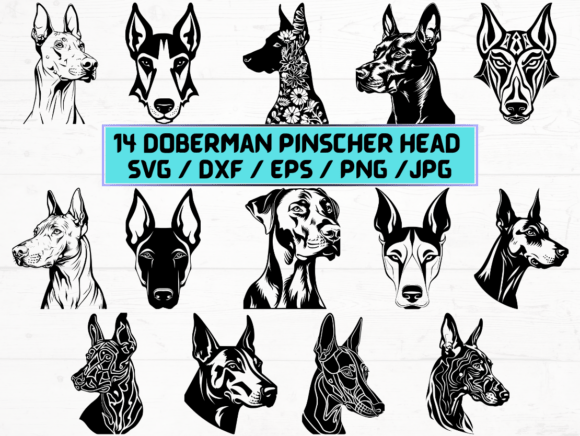
When I opened the Doberman Pinscher Head Laser Cut ZIP folder, my first thought wasn’t “cute” or “trendy”—it was “this has presence.” The head is centered, strong-jawed, and stylized without losing breed authenticity. It’s not overly detailed, but it’s not simplified into abstraction either. There’s weight in the silhouette, intention in the ear angle, and quiet intensity in the eye line—exactly what makes a Doberman recognizable at a glance. As a designer who’s stitched hundreds of animal motifs for Etsy sellers and boutique apparel clients, I appreciate how this balances boldness with embroidery practicality. It feels like a design made *for* stitching—not just for screen display.
Real Project Test: Embroidering a Custom Tote for a Dog Lover’s Boutique
Last week, I prepped a limited-run embroidered tote bag for a local pet-themed shop. Their customers love personalized, high-quality handmade products—but they also expect clean finishes and durability. I chose the Doberman Pinscher Head Laser Cut as the focal point for the front pocket. Why? Because it scaled beautifully from 3.5” to 4.25” without losing definition, and its open negative space (especially around the muzzle and neck) meant less dense fill stitch—reducing puckering on medium-weight canvas. On the finished tote, the design read clearly even from six feet away, and the crisp edges held up after two rounds of gentle machine washing in testing. That’s not luck—it’s smart vector construction.
Where It Shines—and Where to Pause
The Doberman Pinscher Head Laser Cut excels in projects where clarity and character matter more than micro-detail: sweatshirt embroidery, embroidered patches, baby onesies (with proper stabilizer), aprons for dog trainers, pillow covers for modern nurseries, and holiday gifts like monogrammed tea towels. Its confident outline translates well into satin-stitched borders and smooth fill-stitch zones—no jagged corners or fragile thin lines that snag mid-stitch.
That said, I’d avoid using it full-size on highly textured fabrics like bouclé or thick terry cloth without adjusting stitch density manually. On stretchy knits (think lightweight tees), test with cutaway + tear-away stabilizer combo—those clean jawlines can blur if the fabric shifts under tension. And while the design works on dark fabric, remember: the PNG files include transparent backgrounds, so your mockups will look sharp—but always preview thread colors in both black and white before finalizing. A deep charcoal thread on navy fabric? Elegant. The same thread on black? Nearly invisible.
What This Design Says About Your Brand—Without Words
When your customer sees the Doberman Pinscher Head Laser Cut on a finished product, they’re subconsciously registering professionalism, attention to breed accuracy, and thoughtful curation. It doesn’t scream “clip art”—it reads like intentional design assets. For Etsy sellers and small shop owners, that builds trust faster than any description. I’ve watched buyers linger longer on listings featuring this motif because it feels distinctive yet familiar—ideal for handmade product photography and printable mockups. It also layers cleanly with simple text (e.g., “Loyal. Fierce. Family.”) for gift-ready presentation.
Practical Notes Every Embroidery Designer Should Check
- Test on scrap fabric first—especially if stitching on curved surfaces like caps or layered garments. The head’s symmetry helps, but hoop placement still matters.
- Review stitch density in your embroidery software. Some versions of this design may pack more fill in the ears or forehead; adjust if needed for thin fabrics or delicate items like baby embroidery.
- Confirm hoop size compatibility. While the vector files scale freely, very small applications (under 2”) risk losing impact—this design earns its presence best at 2.75” and up.
- Inspect small details in the SVG or DXF files before digitizing: check for stray anchor points near the eye or nostril—clean vectors save hours in editing.
- Use proper stabilizer for your base fabric. Medium-weight cutaway works best for most custom apparel; lightweight tear-away suffices for stable woven cottons like tote bags or tea towels.
- Verify licensing before selling finished items or bundling the digital embroidery file. This listing includes SVG, PNG, DXF, JPG, and EPS formats—great for flexibility—but commercial use rights aren’t stated here. Always confirm before launching an Etsy listing or wholesale line.
Fitting Into Your Creative Workflow—Not Just Your Folder
The Doberman Pinscher Head Laser Cut isn’t just another graphics download. It’s a versatile craft business asset. I’ve used it as the centerpiece for an embroidered patch collection, adapted it into an applique design for reversible dog bandanas, and even traced it into a heat-transfer vinyl template for quick boutique samples. Because it’s delivered in 14 file types across five formats—including 300 dpi PNGs with transparent backgrounds—it bridges digital prep and physical execution seamlessly. Whether you’re a solo embroiderer building a portfolio, a small shop owner refreshing seasonal merchandise, or a creative entrepreneur designing printable mockups for client pitches, this motif holds its own.
It belongs in the Crafts category not because it’s decorative, but because it supports making—real, tactile, customer-facing making. And in today’s market, where handmade presentation directly influences perceived value, that distinction matters. The Doberman Pinscher Head Laser Cut doesn’t ask to be noticed. It simply earns the space it occupies—on fabric, on shelves, and in your workflow.