Book SVG, DXF, EPS, JPG, PNG
A Designer’s First Glance: Clean, Quiet, and Thoughtfully Composed
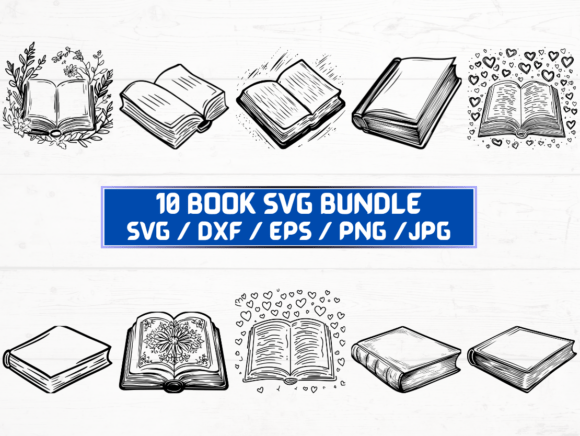
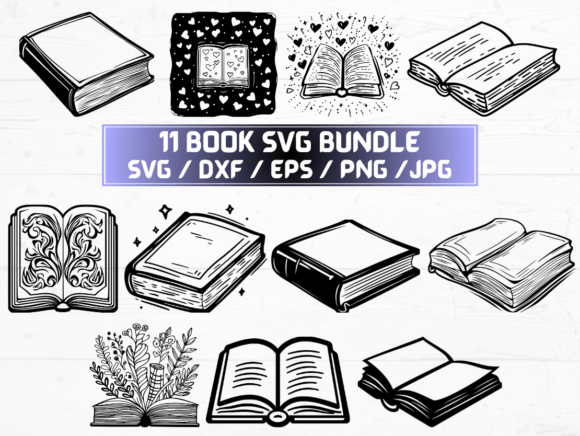
Opening the ZIP folder for Book SVG, DXF, EPS, JPG, PNG, I immediately notice the consistency across formats — 11 of each file type, all named clearly and organized without clutter. As someone who’s stitched hundreds of book-themed designs for baby onesies, boutique aprons, and literary-themed tote bags, this feels like a grounded, intentional collection — not a rushed clipart dump. The shapes are balanced: soft curves, modest line weight, and just enough interior detail (like subtle spine texture or gentle page curl) to read as “book” at a glance, but not so busy that it collapses under dense fill stitch. It’s a design that breathes — which matters more than you’d think when stitching on terry cloth towels or lightweight cotton baby blankets.
Where This Design Truly Shines in Real Projects
I recently used one of these Book SVG, DXF, EPS, JPG, PNG files to embroider a set of linen tea towels for a local bookstore’s holiday pop-up. We paired it with minimalist serif text (“Chapter One”, “Read Slowly”) and stitched it on the lower corner — 3.2" wide, medium-density fill stitch, tear-away + cutaway stabilizer combo. The result? Crisp edges, no puckering, and a tactile warmth that customers kept touching. That’s the quiet strength of this design: it supports storytelling without shouting. It works beautifully on:
- Custom apparel — especially crewneck sweatshirts and relaxed-fit tees where subtlety reads as sophistication
- Embroidered patches — clean outlines hold up well in heat-applied or sew-on versions
- Baby embroidery — gentle scale and open negative space avoid overwhelming tiny onesies or burp cloths
- Nursery decor — pillow covers and framed hoop art benefit from its calm visual weight
- Holiday gifts & boutique branding — pairs effortlessly with neutral thread palettes (oatmeal, slate, deep burgundy) for timeless appeal
Where to Pause — Practical Embroidery Considerations
This isn’t a “set-and-forget” embroidery file. Its thoughtful simplicity means it rewards attention — not automation. On textured fabrics like terry cloth or bouclé knit, I recommend reducing fill stitch density by 10–15% and testing on scrap first; otherwise, fine details (like the slight curve of a closed book’s top edge) can blur. For caps and curved surfaces, avoid placing it near the bill seam — the clean lines read best on flat or gently contoured areas. And while the PNGs are crisp at 300 dpi with transparent background (ideal for digital mockups), don’t assume the SVG or DXF will auto-convert to perfect stitch logic — always run them through your digitizing software or trusted digitizer to verify jump stitches, underlay, and pull compensation.
Small Hoop Sizes & Delicate Fabrics: A Gentle Reminder
If you’re stitching on thin cotton voile, rayon challis, or stretchy jersey, stabilize generously — even light-weight cutaway helps anchor those smooth outer contours. Tiny lettering isn’t part of this design (a smart choice), but if you plan to add custom text alongside it, keep font height above 0.25" for reliable satin stitch definition. Also: on dark fabric, test thread contrast early. A soft charcoal grey thread may disappear on navy twill unless you add a white underlay — something the Book SVG, DXF, EPS, JPG, PNG files themselves won’t dictate, but your final finished product absolutely depends on.
How It Shapes Perception — Beyond the Stitch
For Etsy sellers and small shop owners, this design quietly elevates perceived value. Unlike overly ornate motifs, it signals care — in curation, execution, and intention. Customers recognize that restraint. When stitched cleanly on an organic cotton tote or a hand-dyed apron, it reads as handmade product, not mass-printed graphic. That builds trust. It also scales gracefully across touchpoints: use the PNG for your printable mockup, the SVG for web previews, the EPS for vector-based branding — making it versatile design assets for your craft business. And because it avoids trend-driven clichés (no cartoonish glasses, no exaggerated spines), it stays relevant across seasons — critical for holiday embroidery, wedding gifts, or evergreen personalized gifts.
Your Designer Checklist Before Stitching
Before loading Book SVG, DXF, EPS, JPG, PNG into your machine or listing it in your shop:
- Test on scrap fabric — same fiber content and weight as your final project
- Check thread color contrast on both light and dark backgrounds using a simple black-and-white mockup
- Review stitch density — especially in curved fill areas — and adjust if needed for fabric drape
- Confirm hoop size compatibility; some versions may require >4" hoops for optimal spacing
- Inspect small details at actual stitch-out size — zoom in on corners and transitions
- Use proper stabilizer based on fabric movement, not just thickness
- Verify licensing terms — this listing doesn’t state commercial use rights, so confirm before selling finished items or bundling as digital embroidery file products
Final Thought: A Design That Listens
What makes Book SVG, DXF, EPS, JPG, PNG stand out isn’t flash — it’s fidelity. To craft. To context. To the quiet pride of a customer unboxing a perfectly stitched, thoughtfully scaled book motif on their favorite kitchen towel. It’s the kind of embroidery file that disappears into the object — letting the material, the stitch, and the meaning take center stage. Whether you’re building a handmade shop, launching a commercial embroidery service, or simply gifting something deeply personal, this is a design that earns its place — stitch by careful stitch.